
Kitchen Ventilation Buying Guide: How to Choose the Right Range Hood for Your Home
The right range hood depends on your kitchen layout, cooking habits, ventilation options, and performance needs. Start by choosing the appropriate hood style, decide between ducted or non-ducted ventilation, then compare size, CFM, noise levels, and installation requirements to find the best fit for your home.
A range hood does more than remove cooking odors. It helps improve indoor air quality, captures grease before it settles on surfaces, reduces excess heat and moisture, and can become a key design feature in your kitchen.
Before selecting a model, evaluate these five factors:
- Kitchen layout and cooktop location
- Range hood type
- Ducted versus non-ducted ventilation
- Size, airflow (CFM), and noise level
- Installation requirements
What Is a Range Hood and Why Is It Important?
A range hood is a ventilation appliance installed above a cooktop or range. It removes smoke, steam, grease particles, cooking odors, and heat by either exhausting air outdoors or filtering and recirculating it back into the kitchen.
For most households, a range hood serves several important functions:
- Improves indoor air quality by removing airborne contaminants
- Reduces grease buildup on cabinets, walls, and ceilings
- Helps manage heat and moisture generated during cooking
- Provides task lighting above the cooking surface
- May help satisfy local building code ventilation requirements
- Enhances kitchen aesthetics with integrated or decorative designs
Learn more about ventilation and indoor air quality in “Range Hoods and IAQ: Why Ventilation Is Essential for a Healthier Kitchen.”
Which Type of Range Hood Is Best for Your Kitchen?
The best range hood style depends primarily on your kitchen layout, cabinet configuration, and design preferences. Different hood types are designed for specific installation locations and cooking environments.
Common range hood categories include:
- Under-cabinet range hoods
- Chimney wall-mount range hoods
- Island range hoods
- Built-in insert range hoods
- Downdraft ventilation systems
- Professional-style range hoods
- Outdoor range hoods
Under-Cabinet Range Hoods
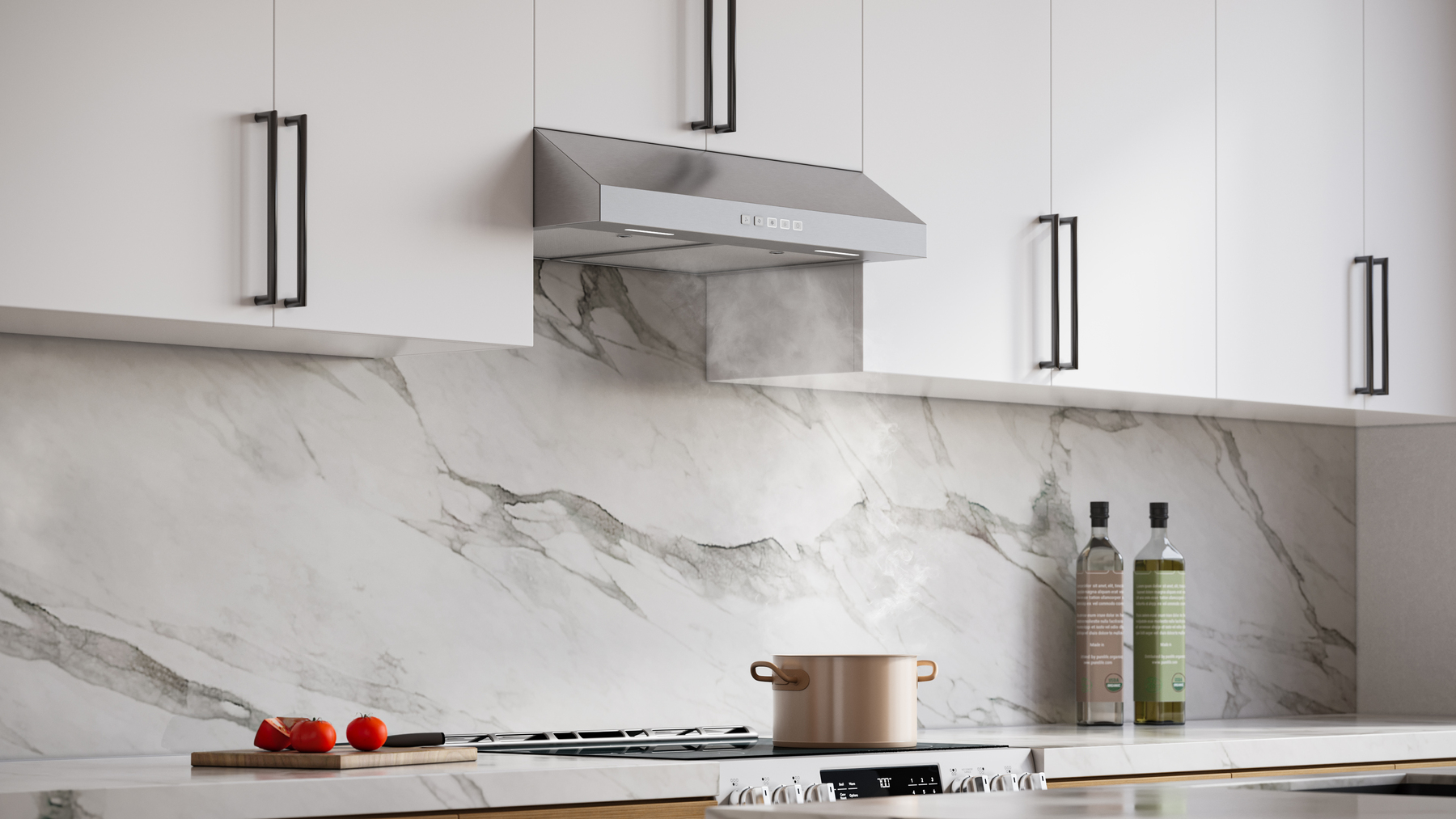
Under-cabinet range hoods install beneath existing cabinets above the cooktop. They are one of the most popular options because they maximize space and work well in traditional kitchen layouts.
Best for: Small to medium kitchens with upper cabinetry above the cooking surface.
Chimney Wall-Mount Range Hoods
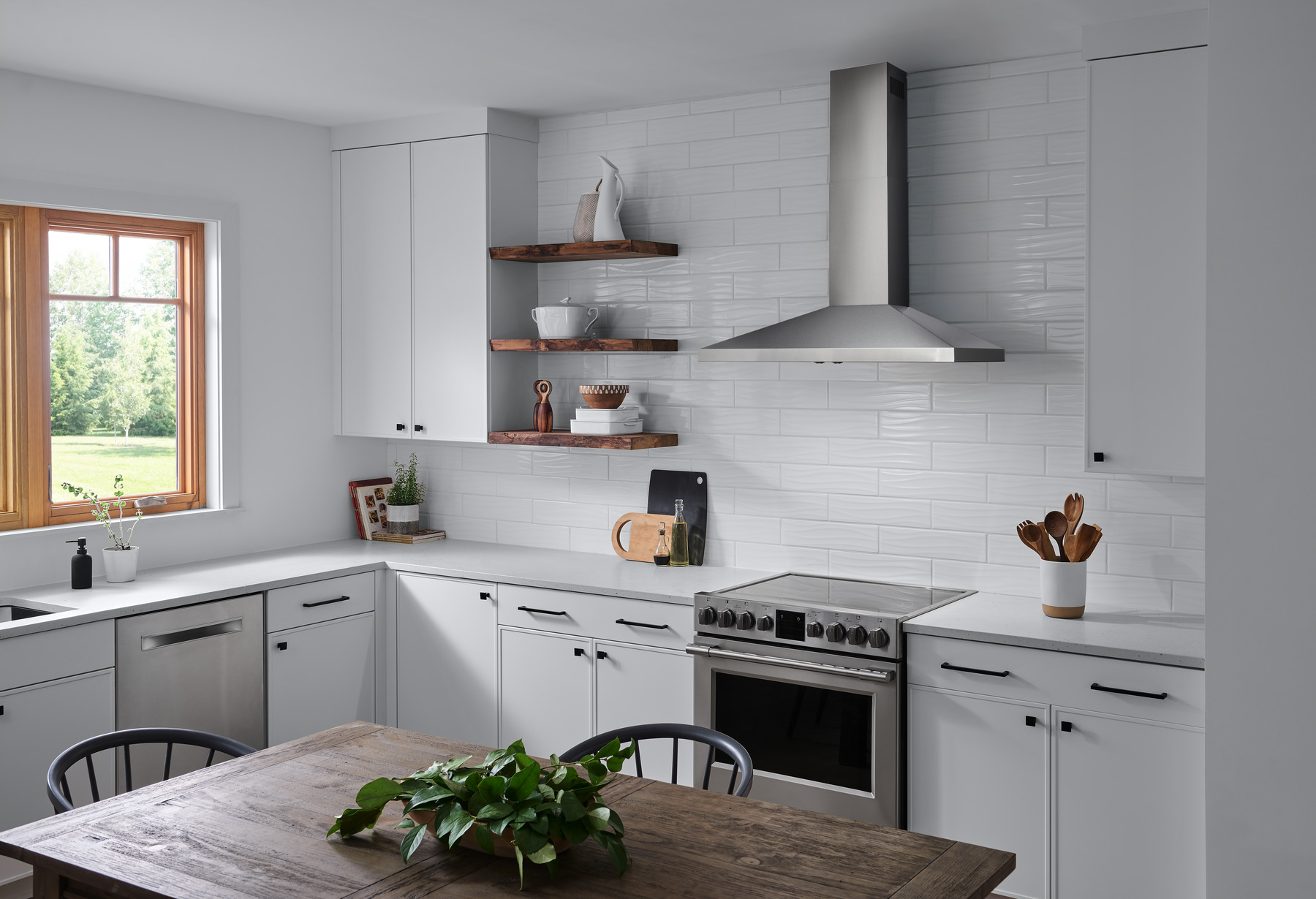
Chimney range hoods mount directly to the wall and feature a visible chimney section that conceals ductwork. They combine strong ventilation performance with a modern, architectural appearance.
Best for: Open-concept kitchens without cabinets above the range.
Island Range Hoods
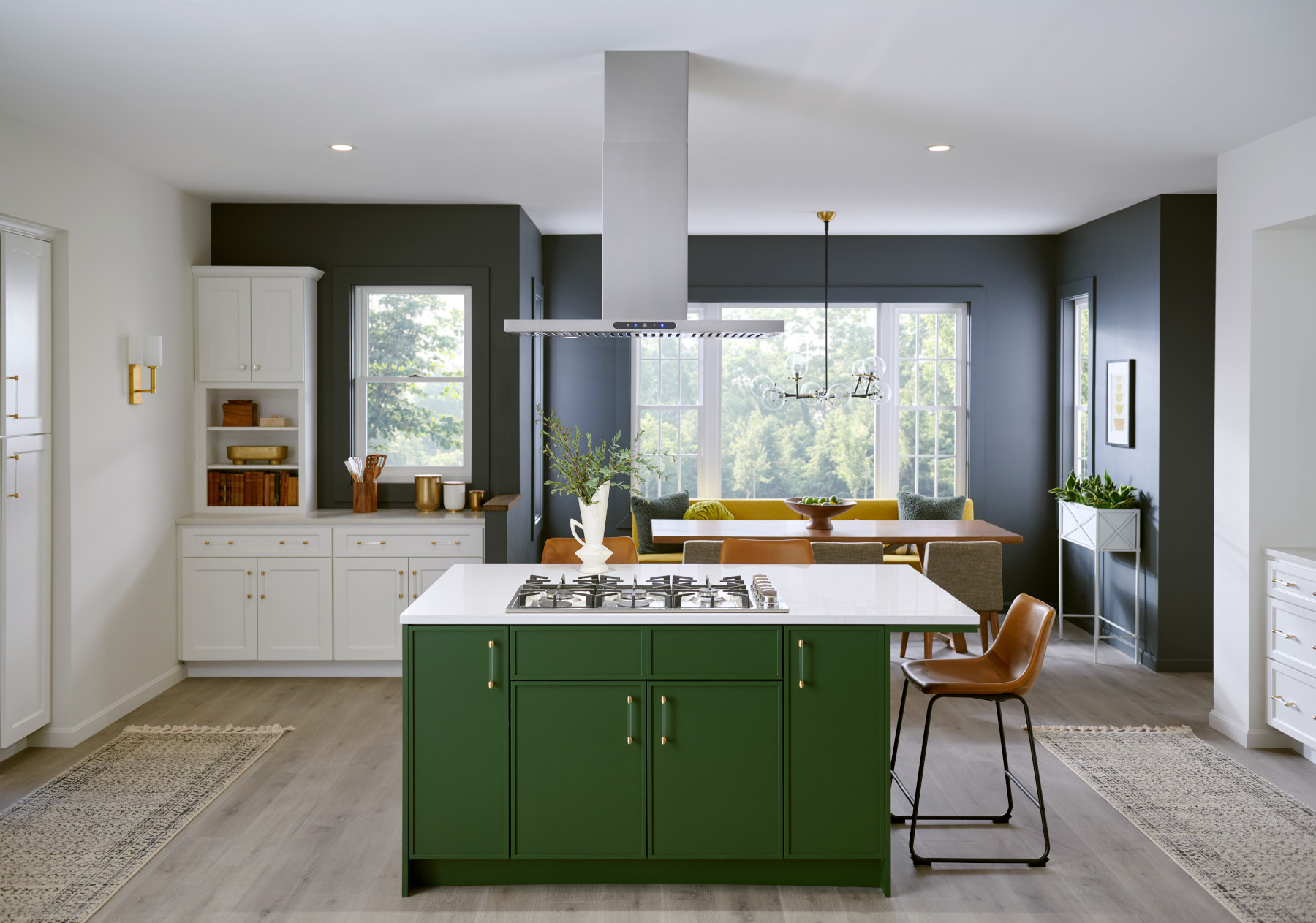
Island range hoods suspend from the ceiling above island cooktops. Because they are visible from all sides, they often serve as a design centerpiece while providing powerful ventilation.
Best for: Kitchens with island cooking stations.
Built-In Insert Range Hoods
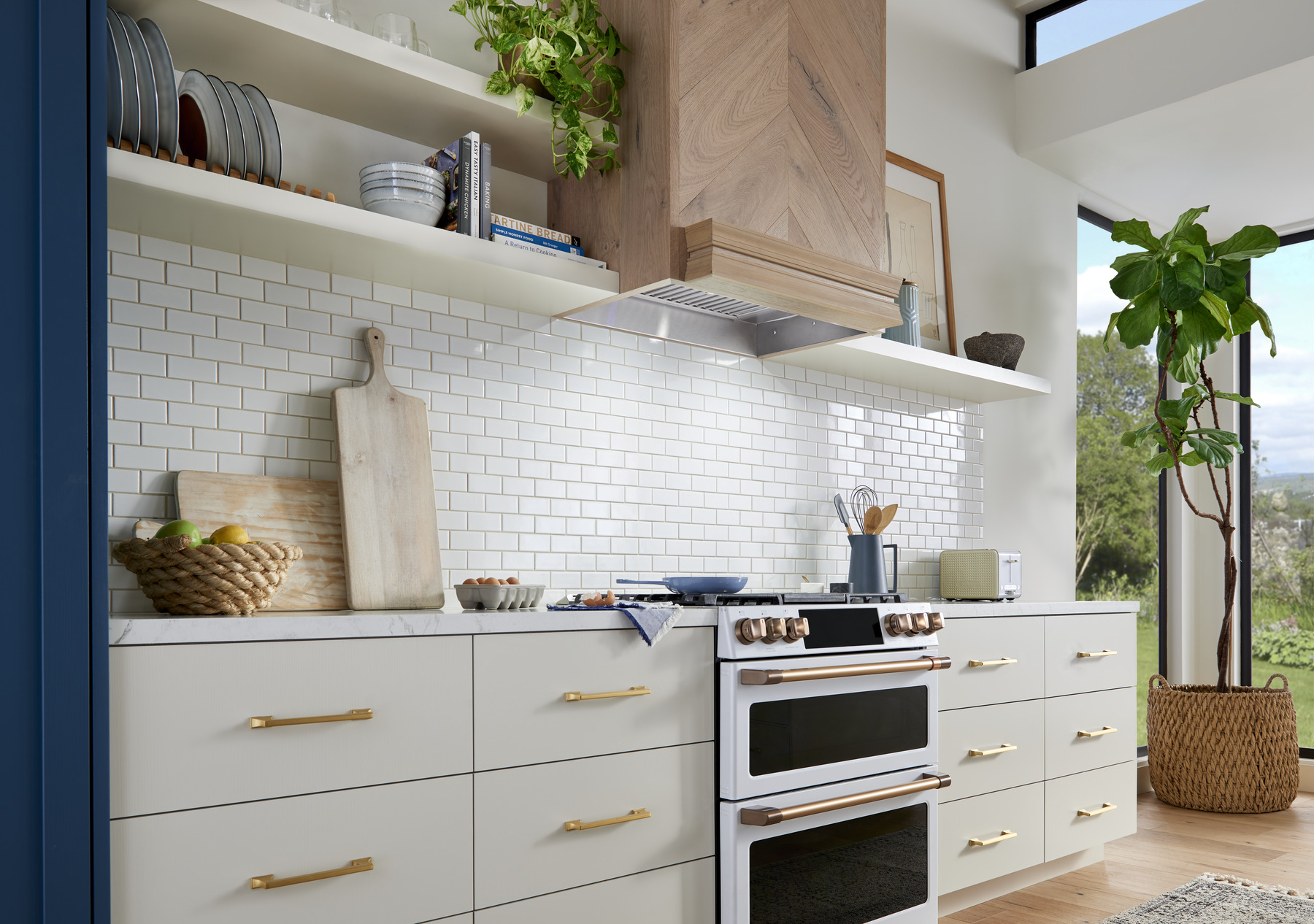
Built-in inserts are installed inside custom cabinetry or decorative hood enclosures. They provide the performance of a traditional hood while maintaining a seamless appearance.
Best for: Custom kitchens and homeowners seeking a concealed design.
Downdraft Ventilation Systems
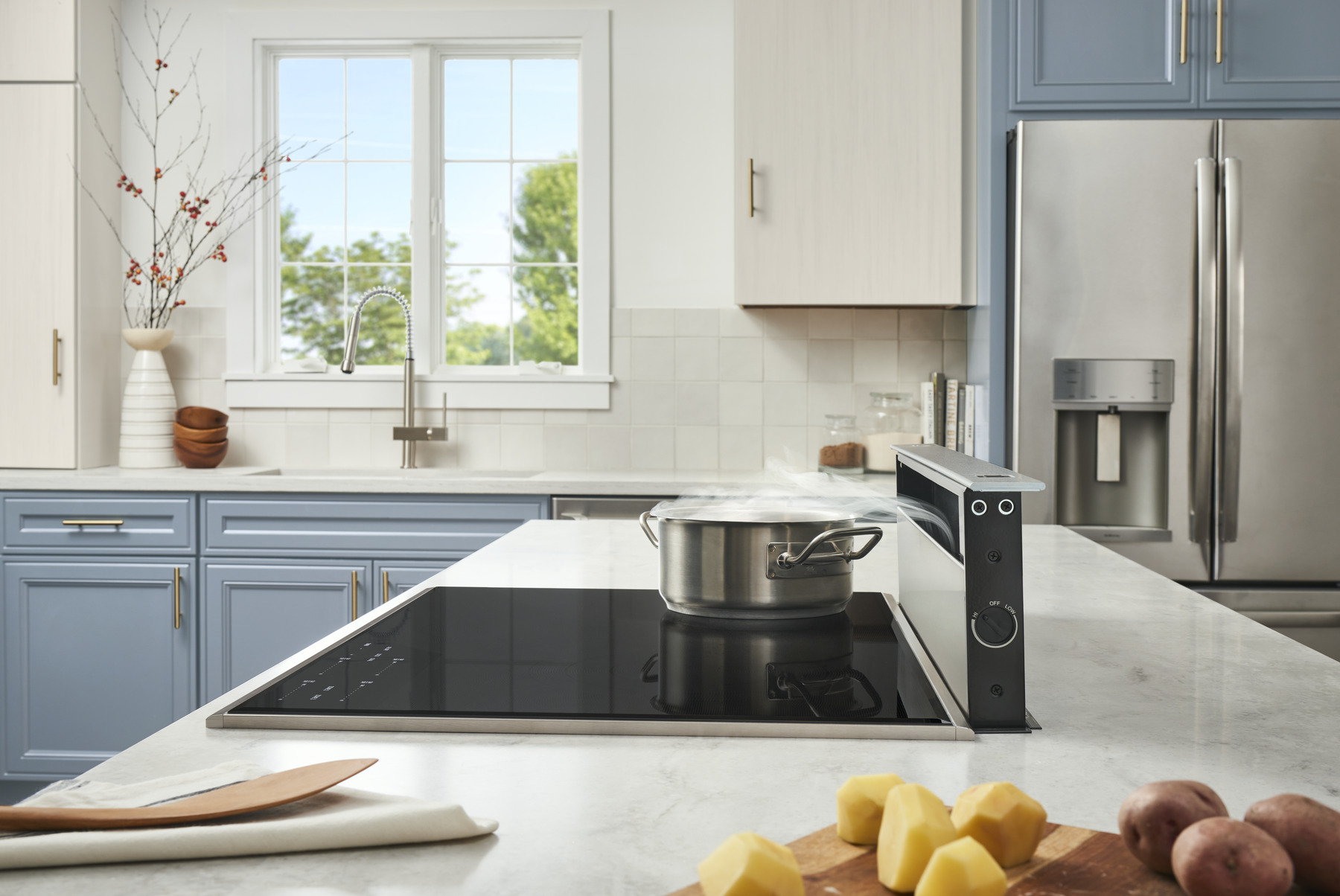
Downdraft systems rise behind the cooktop when needed and pull air downward. They eliminate the need for overhead ventilation but generally offer lower capture efficiency than overhead hoods.
Best for: Minimalist kitchens or spaces where overhead installation is not practical.
Professional-Style Range Hoods
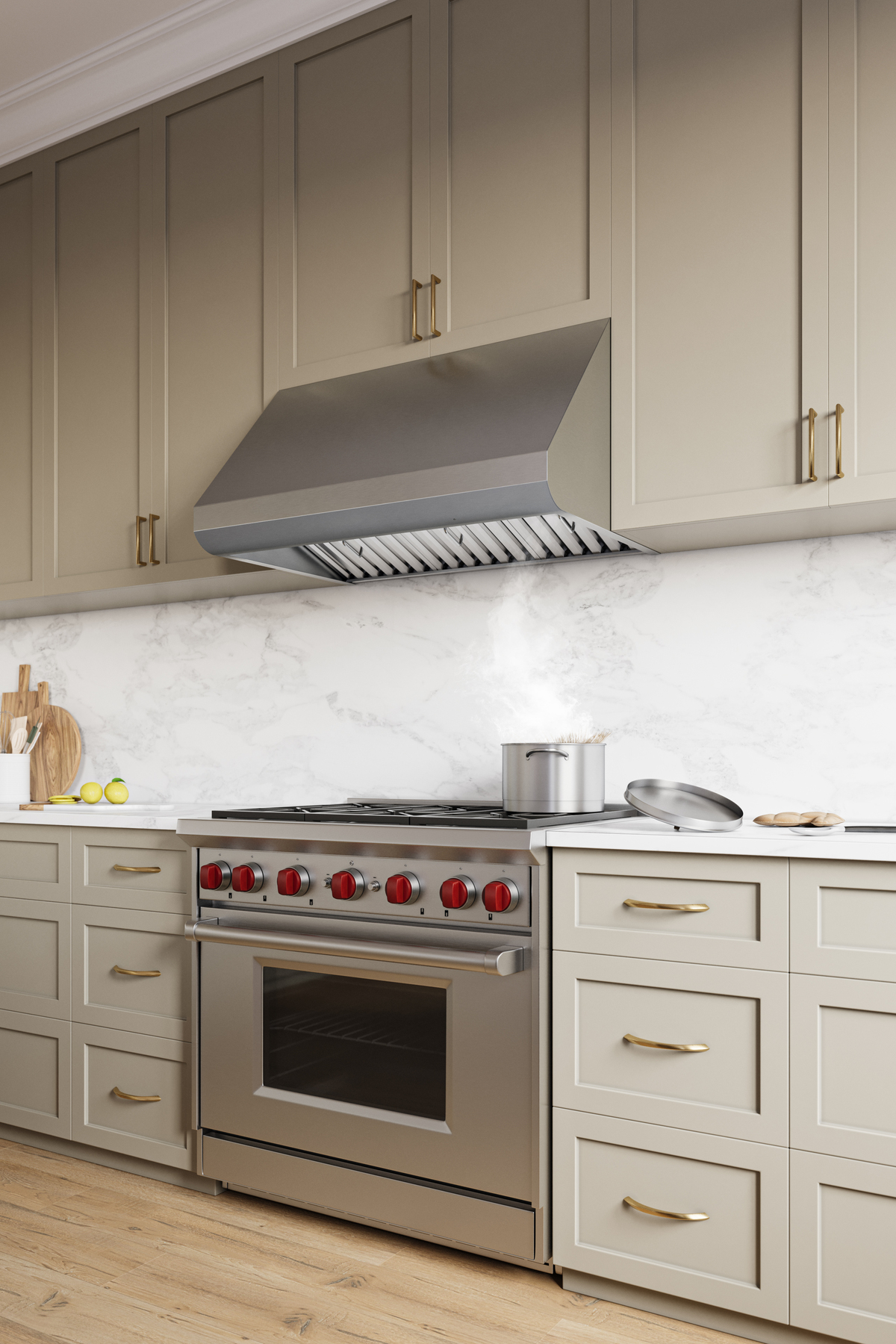
Professional range hoods are designed for larger cooking surfaces and high-output gas ranges. They typically offer higher airflow and wider coverage areas.
Best for: Serious home cooks and professional-style appliances.
Outdoor Range Hoods
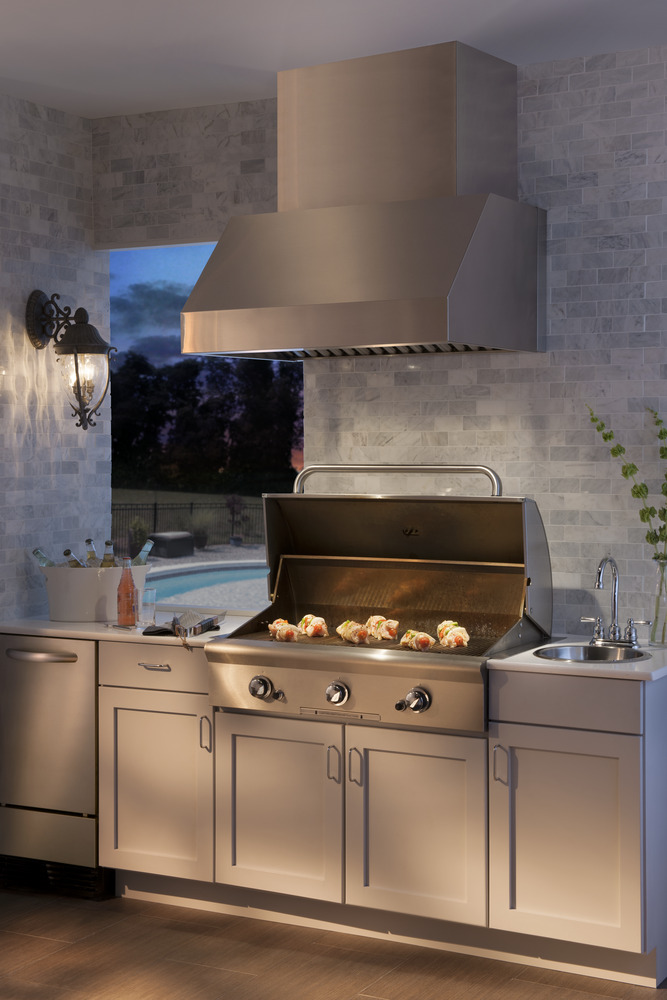
Outdoor range hoods are engineered to withstand exterior environments while removing smoke, heat, and grease from outdoor cooking areas.
Best for: Outdoor kitchens and built-in grilling stations.
For additional style comparisons, see “Range Hood Specifications Explained: Width, Mounting Height, CFM and Style Options.”
Should You Choose a Ducted or Non-Ducted Range Hood?
Your ventilation method has a major impact on performance. While both systems improve kitchen air quality, ducted models typically provide superior long-term results.
| Feature | Ducted Hood | Non-Ducted Hood |
|---|---|---|
| Removes smoke and heat | Yes | Limited |
| Removes odors | Excellent | Moderate |
| Requires ductwork | Yes | No |
| Installation complexity | Higher | Lower |
| Filter maintenance | Minimal | Regular charcoal filter replacement |
Ducted Range Hoods
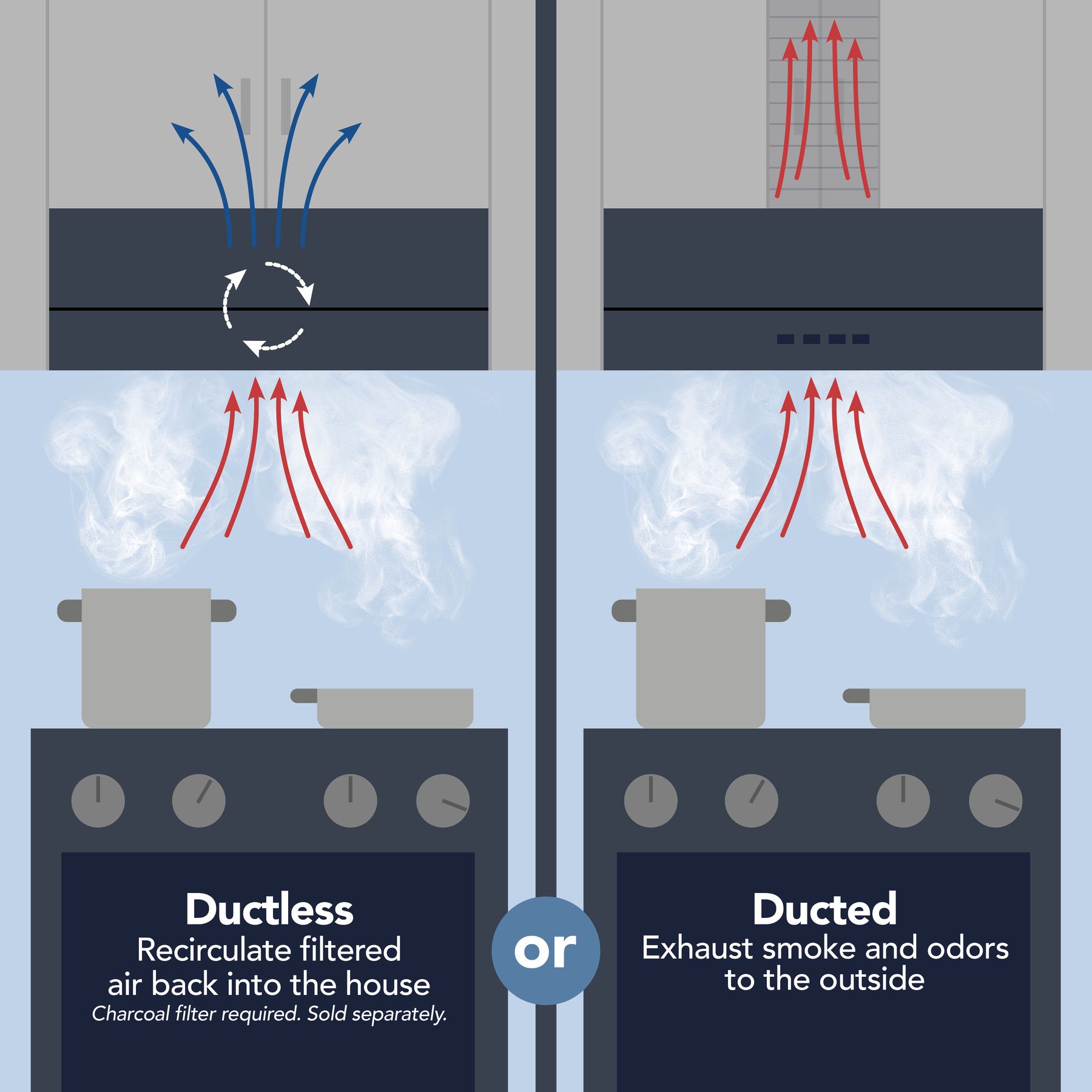
Ducted hoods vent air outdoors through ductwork. They remove smoke, grease, heat, and cooking odors from the home rather than recirculating them.
Best for: Frequent cooking, gas ranges, high-heat cooking methods, and households that prioritize maximum ventilation performance.
Non-Ducted Range Hoods
Non-ducted or ductless hoods filter air through grease and charcoal filters before returning it to the kitchen. They are easier to install because they do not require exterior venting.
Best for: Apartments, condos, and homes where exterior ducting is not possible.
Learn more about filter maintenance and replacement requirements here.
What Range Hood Features Matter Most?
Performance specifications often have a greater impact on daily satisfaction than appearance alone. Focus on airflow, coverage, noise levels, and ease of maintenance when comparing models.
Key features to evaluate include:
- Size and coverage area
- CFM airflow rating
- Fan speed settings
- Noise level
- Lighting
- Filter design
- Control options
- Smart features
Size and Coverage
A range hood should be at least as wide as the cooking surface below it. Common widths include 30-inch and 36-inch models, though larger hoods often provide improved smoke and grease capture.
CFM Rating (Cubic Feet per Minute)
CFM measures how much air a hood moves each minute. Higher CFM ratings provide stronger ventilation and are generally recommended for larger kitchens, gas ranges, and heavy cooking.
For a detailed explanation, see “Range Hood CFM Guide: How to Choose the Right Power for Your Kitchen.”
Fan Speeds
Multiple fan speeds allow you to balance ventilation performance with noise. Most residential hoods offer between two and four speed settings.
Noise Level
Range hood noise is measured in sones. Lower sone ratings indicate quieter operation and are particularly valuable in open-concept homes where kitchens connect directly to living areas.
Learn more in “What is a Sone and How Can You Improve Yours?”
Lighting
Integrated LED lighting improves visibility while cooking and generally provides longer life and greater energy efficiency than older lighting technologies. Some range hoods also feature CCT (Correlated Color Temperature) lighting, which allows you to adjust the light color from warmer to cooler tones to better match your kitchen design, task lighting needs, or time of day.
To learn more about how adjustable CCT lighting works and its benefits in kitchens and bathrooms, read What Is CCT Lighting and How Does It Improve Kitchens and Bathrooms?.
Filter Design
Ducted hoods commonly use aluminum mesh or stainless-steel baffle filters that can often be cleaned in a dishwasher. Ductless models rely on charcoal filters that require periodic replacement.
Find replacement guidance here.
Controls and Smart Features
Modern range hoods may include touch controls, delay-off timers, heat sensors, Wi-Fi connectivity, and app-based controls that automate ventilation performance.
What Should You Know About Range Hood Installation?
Installation requirements vary significantly based on the hood type and ventilation method. Planning ahead can help avoid unexpected costs and ensure optimal performance.
Consider these installation factors:
- DIY versus professional installation
- Electrical requirements
- Duct routing options
- Mounting height requirements
DIY Installation
Many under-cabinet and ductless models are suitable for experienced DIY homeowners, particularly when replacing an existing hood with a similar configuration.
Look for the EZ1 logo when shopping if you want a simplified one-person installation process.
Professional Installation
Professional installation is generally recommended for island hoods, chimney hoods, new ductwork installations, and projects that require electrical modifications.
Electrical Requirements
Most range hoods either plug into a dedicated outlet or connect directly to household wiring. Verify power access before selecting a model.
Duct Routing Options
Ducted systems may vent through a wall, ceiling, or roof depending on the kitchen layout. Shorter, straighter duct runs generally improve airflow performance.
How Do You Choose the Right Range Hood for Your Cooking Style?
The ideal range hood is not necessarily the most powerful model. It is the one that matches your cooking habits, kitchen layout, and ventilation needs.
- Light cooking: A standard under-cabinet or ductless hood may be sufficient.
- Daily family cooking: Consider a ducted hood with multiple fan speeds and moderate CFM.
- Heavy frying or gas cooking: Choose a ducted model with higher airflow capacity.
- Open-concept kitchens: Prioritize low sone ratings and efficient capture performance.
- Custom kitchen designs: Built-in insert systems provide a seamless appearance.
Once you've evaluated your kitchen layout, ventilation requirements, and desired features, you're ready to select the right range hood for your home. Visit your local retailer or browse the complete Broan-NuTone range hood collection to compare available models.
Frequently Asked Questions About Range Hoods
What size range hood should I buy?
A range hood should be at least as wide as your cooktop. Many homeowners choose a hood that is slightly wider for improved smoke and grease capture.
Is a ducted range hood better than a ductless model?
In most cases, yes. Ducted hoods remove contaminants from the home entirely, while ductless models filter and recirculate air back into the kitchen.
How much CFM do I need for a residential kitchen?
The right CFM (Cubic Feet per Minute) depends on factors such as your cooking habits, cooktop size, fuel type, and kitchen layout. Homeowners who frequently fry, sear, use high-BTU gas burners, or cook with strong aromas typically benefit from higher CFM ratings, while lighter cooking may require less airflow.
For a detailed breakdown of recommended CFM ranges and how to calculate the right ventilation power for your kitchen, see the Range Hood CFM Guide: How to Choose the Right Power for Your Kitchen.
How often should range hood filters be cleaned?
Metal grease filters should be cleaned regularly based on cooking frequency. Charcoal filters used in ductless hoods should be replaced according to manufacturer recommendations.
Are quieter range hoods less powerful?
Not necessarily. Many modern range hoods combine strong airflow performance with low sone ratings through improved motor and airflow design.