
Key Considerations When Choosing a Range Hood for Your Kitchen
The best range hood for your kitchen depends on your range size, fuel type, cabinet layout, ceiling height, cooking habits, and design style. A properly selected hood removes smoke, grease, heat, odors, moisture, and airborne pollutants more effectively, helping improve indoor air quality while complementing your kitchen design.
Choosing the right range hood starts with understanding how your kitchen is built and how you cook. Every kitchen has different ventilation needs based on layout, appliance type, cooking intensity, available space, and design preferences.
Before selecting a range hood, evaluate your kitchen environment carefully. The right choice should provide strong ventilation performance, fit the installation space, and enhance the look of the room.
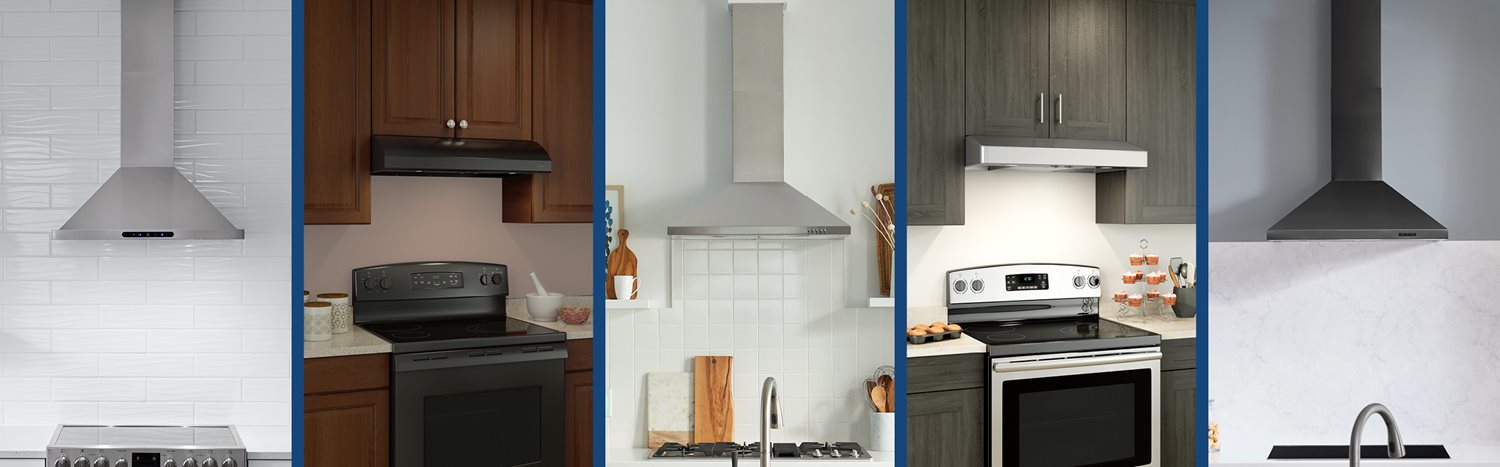
Check out our selection of range hoods.
Key Questions to Ask Before Choosing a Range Hood
Use these questions to narrow your options and identify the range hood type that best fits your kitchen:
- What size is your range or cooktop?
- Is your cooking appliance electric, conventional gas, induction, or professional-style gas?
- How much space is available above the range?
- How tall are your ceilings?
- How often do you cook?
- Do you frequently cook with high heat, frying, searing, wok cooking, or heavy steam?
- Do you have cabinets above the range?
- What cabinet style, appliance finish, and kitchen design do you want to match?
| Consideration | Why It Matters |
|---|---|
| Range Size | The hood should be wide enough to cover the cooking surface effectively. |
| Fuel Type | Gas and high-output ranges often require stronger ventilation than electric or induction cooktops. |
| Cabinet Layout | Cabinets determine whether an undercabinet hood, insert, or wall-mounted hood is practical. |
| Ceiling Height | Ceiling height affects chimney extensions, mounting height, and installation options. |
| Cooking Style | Frequent high-heat cooking requires higher capture performance and airflow capacity. |
| Kitchen Design | The hood should either blend into the cabinetry or become a purposeful design feature. |
Why These Questions Matter
A range hood is one of the most important appliances in the kitchen because it helps remove heat, smoke, grease, odors, moisture, and airborne pollutants generated during cooking.
Choosing the wrong hood can lead to weak capture performance, lingering odors, grease buildup, excess humidity, and reduced indoor air quality.
For best results, turn on your range hood before you begin cooking. Starting the fan early helps create airflow toward the hood so smoke, steam, and fumes are captured as soon as they are produced.
Three Common Kitchen Environments and the Right Hood for Each
1. Kitchens With Existing Cabinets Above the Range
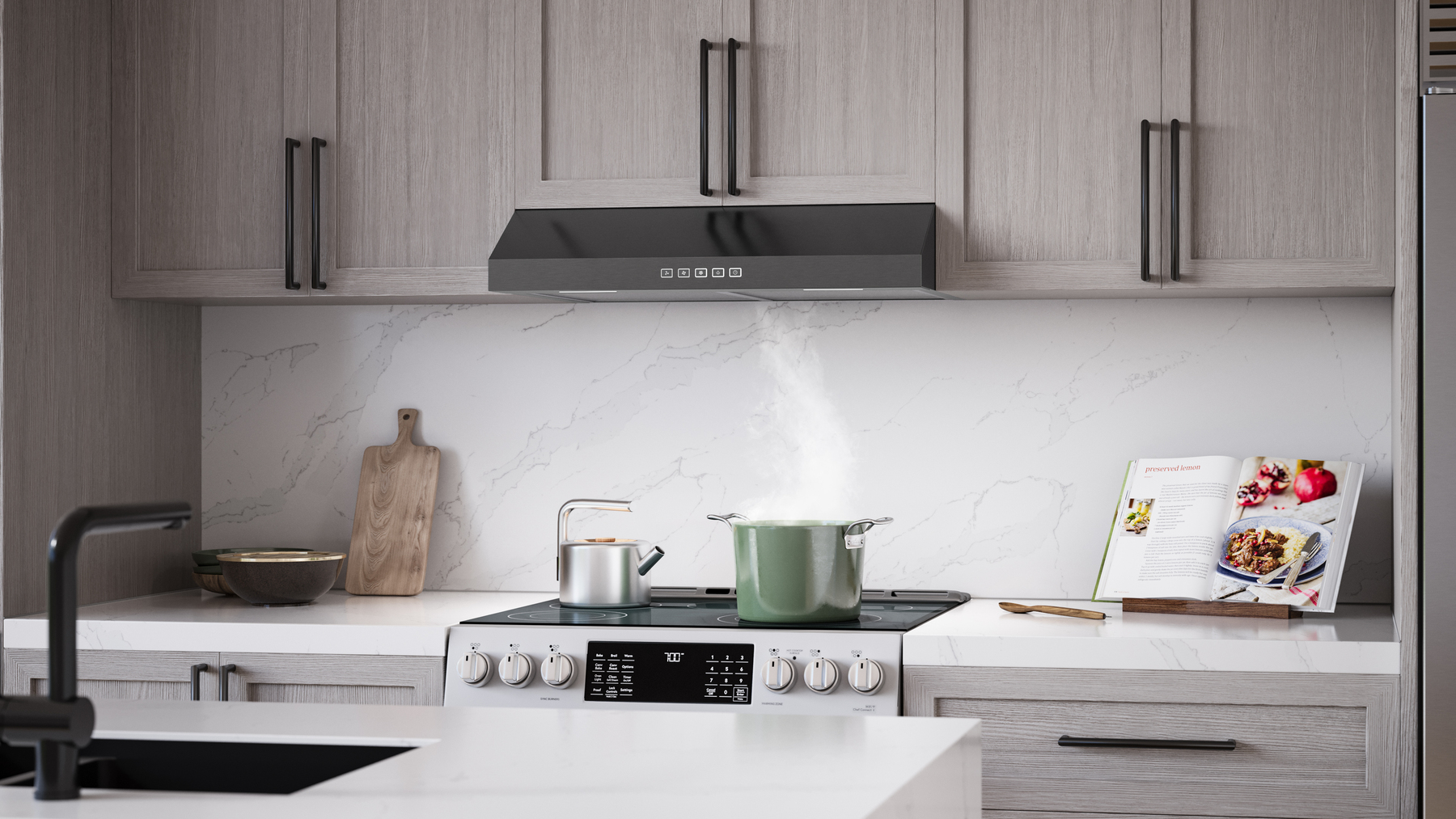
If you have cabinets above your stove and do not plan to remove them, an undercabinet range hood is often the most practical choice. These hoods attach directly beneath the cabinet and provide reliable ventilation in a compact footprint.
If your cabinets include a custom enclosure designed to conceal the ventilation system, a built-in power pack or range hood insert may be the best option. These solutions deliver strong ventilation while blending into custom cabinetry.
Learn more about insert and style options in Range Hood Specifications Explained: Width, Mounting Height, CFM and Style Options.
2. Kitchens Without Cabinets Above the Range
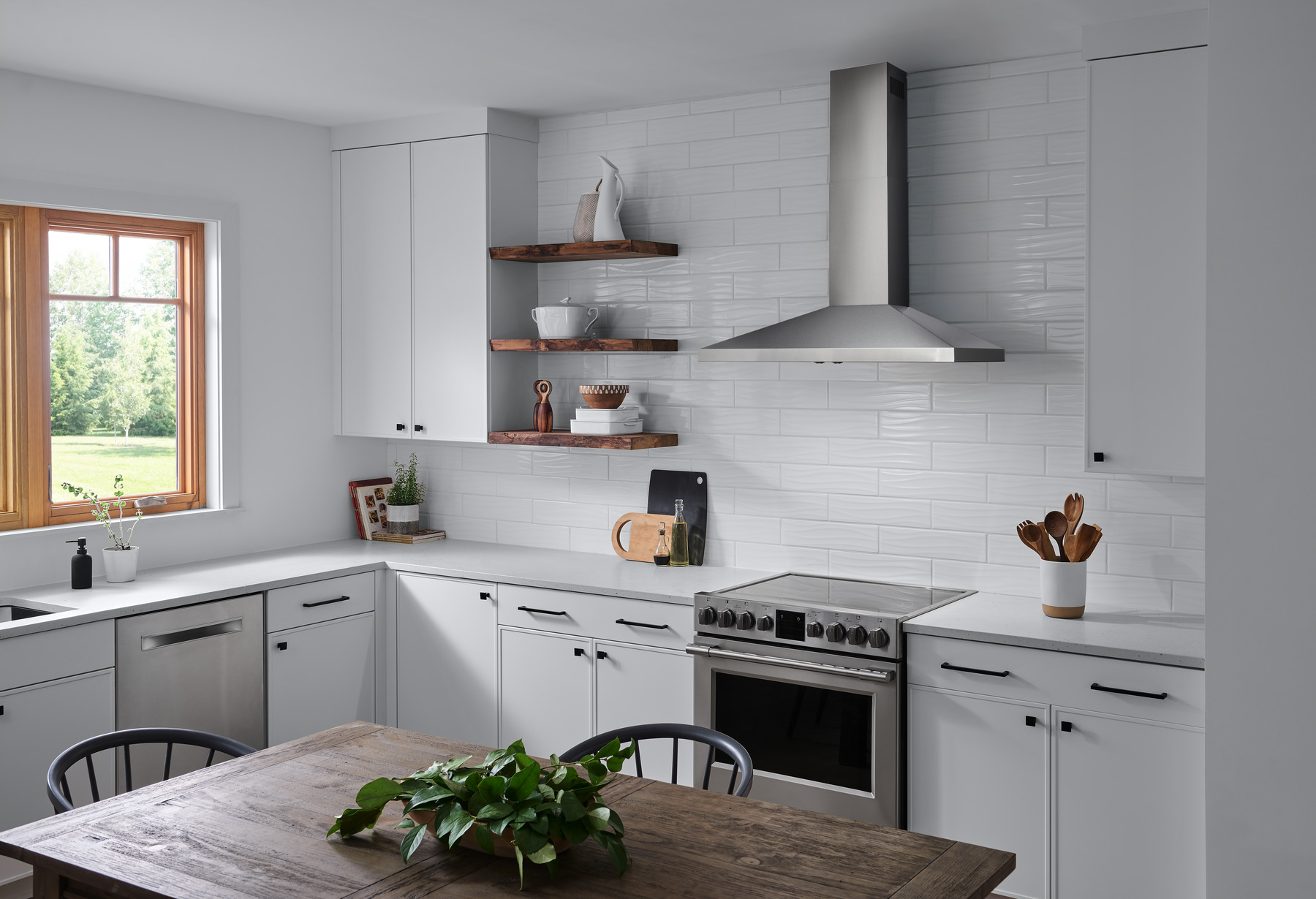
If there are no cabinets above the range, you have more design flexibility. Wall-mounted chimney hoods, professional-style hoods, and select downdraft systems can all work well depending on your layout.
Available wall space, ceiling height, ducting access, and preferred design style will help determine whether a visible chimney hood or a more discreet ventilation solution is the right fit.
3. Open Concept Kitchens or Island Cooking Areas
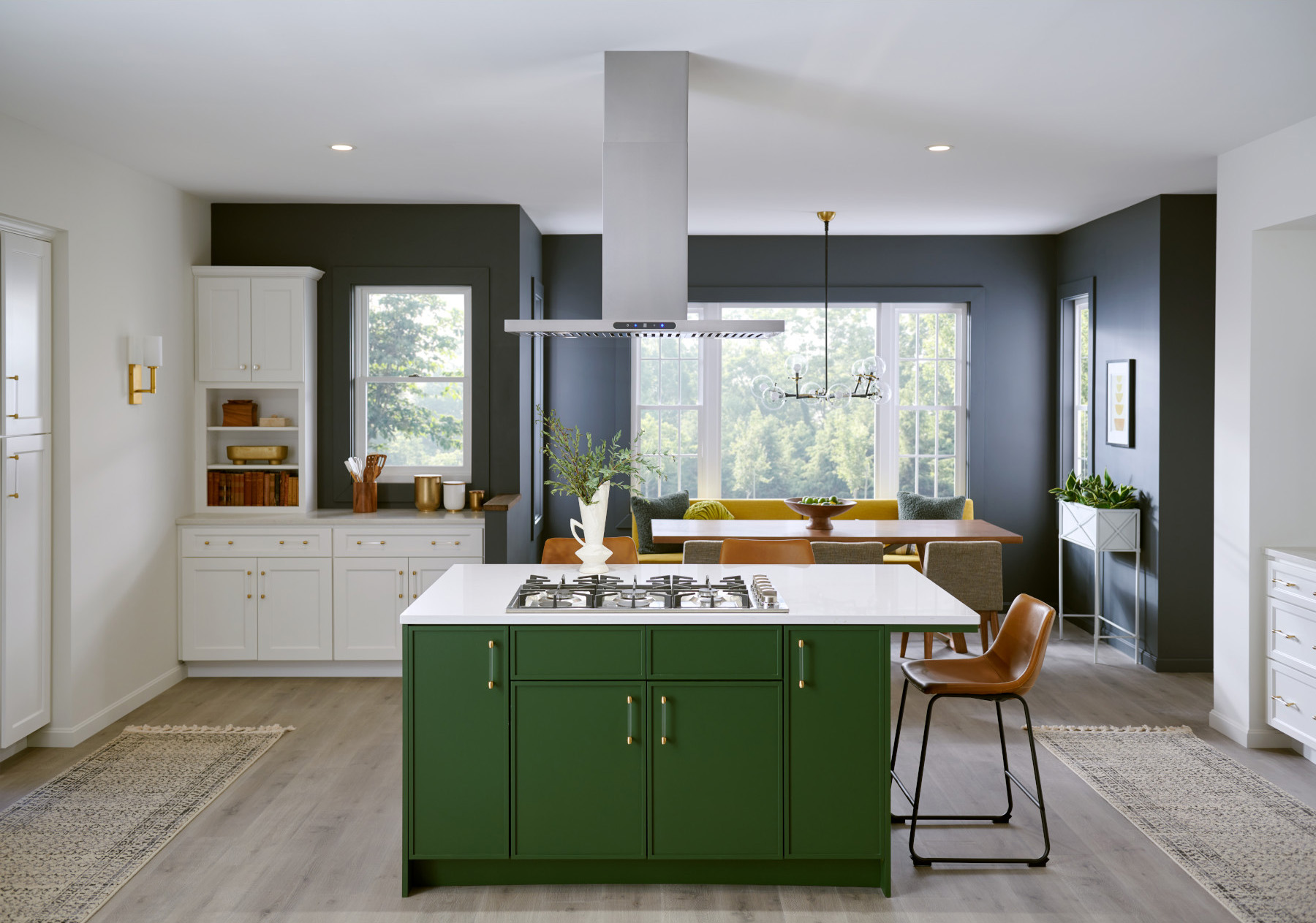
Open concept kitchens often prioritize clear sightlines and visual connection between the kitchen and living areas. When the cooking surface is located on an island, an island range hood provides overhead ventilation while supporting an open layout.
Other ventilation options for island or open concept kitchens include:
- Downdraft systems that rise behind the cooktop when needed
- Ceiling-mounted hoods installed above the island
- Custom insert solutions designed to integrate with architectural features
These options help maintain cooking comfort while supporting the visual flow of the space.
Choosing Your Hood Style Based on Kitchen Layout and Cooking Habits
Once you understand your layout, cabinet structure, ceiling height, range size, and cooking frequency, you can choose a hood style that meets both performance and design goals.
| Kitchen Need | Recommended Hood Type |
|---|---|
| Cabinets above the range | Undercabinet range hood or built-in insert |
| No cabinets above the range | Wall-mounted chimney hood or professional-style hood |
| Island cooktop | Island range hood, ceiling-mounted hood, or downdraft system |
| Custom cabinetry | Power pack or insert |
| Heavy cooking or high-heat cooking | Higher-CFM hood with strong capture performance |
| Minimalist design | Integrated insert, downdraft, or concealed ventilation system |
Whether you want a bold focal point or a hidden ventilation insert, the right range hood should match your cooking habits and help maintain a healthier kitchen environment.
Learn more about matching a hood to your cooking style in "Which Range Hood Matches Your Cooking Style".
Ready to Upgrade Your Ventilation?
After evaluating your kitchen layout and ventilation needs, you can select a range hood that fits your home's style and performance requirements.
Shop range hoods to compare available styles, installation types, and performance options.
Frequently Asked Questions
How do I choose the right range hood for my kitchen?
Start by measuring your range, identifying your fuel type, checking available space, reviewing ceiling height, and considering how often and intensely you cook.
What size range hood do I need?
Your range hood should generally be at least as wide as your cooking surface. Larger or high-output ranges may benefit from a wider hood for better capture.
What type of range hood is best for cabinets above the stove?
An undercabinet range hood is typically best when cabinets remain above the stove. A built-in insert works well when the hood will be hidden inside custom cabinetry.
What range hood works best for an island cooktop?
An island range hood, ceiling-mounted hood, or downdraft system can work for island cooking areas, depending on ceiling height, sightlines, and ducting options.
Does cooking style affect the range hood I need?
Yes. Frequent frying, searing, wok cooking, grilling, or high-heat cooking usually requires stronger ventilation and better capture performance.
Should I turn on my range hood before cooking?
Yes. Turning on the hood before cooking helps establish airflow so smoke, steam, grease, and odors are captured immediately.