
Range Hood Filter Guide: How to Clean, Replace and Improve Kitchen Air Quality
Range hood filters remove grease, smoke, and odors from your kitchen air. Clean aluminum or baffle filters every 3–6 months, and replace charcoal filters every 6 months to maintain airflow, reduce odors, and protect indoor air quality.
Your range hood filter is a primary defense against indoor air pollution created during cooking. Gas and electric cooking can release nitrogen dioxide, carbon monoxide, fine particles, and moisture. Proper filter maintenance ensures these contaminants are captured and removed effectively.
Why Should You Clean or Replace Range Hood Filters?
Range hood filters trap grease, smoke, and airborne particles before they circulate through your home. Over time, buildup restricts airflow and reduces ventilation efficiency.
- Improved indoor air quality (IAQ)
- Stronger airflow and ventilation performance
- Reduced grease buildup on surfaces
- Less lingering smoke and odors
- Extended range hood lifespan
A clogged filter can also increase fire risk during high-heat cooking. Regular maintenance ensures consistent performance and safer operation.
Learn more here: Kitchen Air Quality Guide: Pollutants, Health Risks, and How Ventilation Protects You.
What Types of Range Hood Filters Are Available?
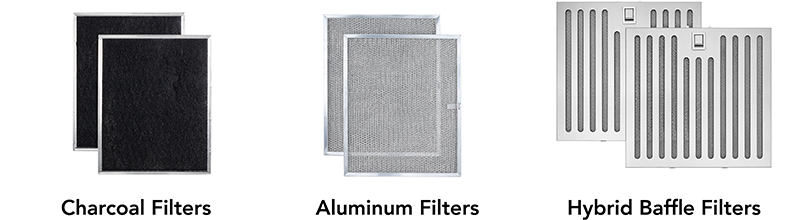
Range hood filters fall into three main categories, each designed for specific ventilation setups and cooking needs:
- Aluminum mesh filters (washable, grease-focused)
- Charcoal filters (odor removal for recirculating hoods)
- Hybrid baffle filters (high-performance grease control)
Aluminum Mesh Filters
Aluminum filters capture grease and larger particles. They are reusable and typically dishwasher-safe, making them cost-effective for long-term use. Cleaning every 3–6 months prevents grease saturation and maintains airflow.
Charcoal Filters
Charcoal filters use activated carbon to absorb odors and gases. They are used in ductless (recirculating) range hoods. Because they cannot be cleaned, they should be replaced approximately every 6 months or sooner with heavy cooking.
Hybrid Baffle Filters
Hybrid baffle filters combine grease capture with airflow optimization. They are commonly used in higher-performance systems and help protect internal components and ductwork. Maintenance varies by model, but regular inspection and timely replacement are essential.
.png)
How Often Should You Clean or Replace Range Hood Filters?
Maintenance frequency depends on cooking habits, grease levels, and ventilation type. Heavy cooking (frying, wok cooking) requires more frequent maintenance.
- Aluminum filters: Clean every 3–6 months
- Baffle filters: Clean every 3–6 months or as needed
- Charcoal filters: Replace every 6 months
If you notice reduced airflow, visible grease buildup, or persistent odors, service your filters sooner.

What Are the Benefits of Regular Filter Maintenance?
Consistent filter care improves both performance and indoor air quality. Clean filters allow your range hood to operate efficiently and reduce strain on internal components.
- Better removal of smoke, moisture, and pollutants
- Improved airflow and quieter operation
- Reduced motor wear and longer appliance life
- Cleaner kitchen surfaces and cabinets
Optimal Air Quality
Clean filters capture more airborne contaminants, reducing exposure to particles and gases that can affect respiratory health.
Improved Efficiency
Unrestricted airflow allows the blower to operate at its designed capacity, improving overall ventilation performance.
Consistent Kitchen Comfort
Effective filtration reduces heat, humidity, and lingering odors, making the kitchen more comfortable during and after cooking.
How Do You Know When It’s Time to Replace a Filter?
Many modern range hoods include filter indicator lights, often triggered after ~30 hours of use. However, visual and performance cues are equally important.
- Visible grease buildup or discoloration
- Lingering cooking odors
- Reduced airflow or suction
- Increased noise during operation
Follow your manufacturer guidelines for exact replacement intervals. You can find your filter replacement here.
FAQ: Range Hood Filter Maintenance
Can you wash all range hood filters?
No. Aluminum and baffle filters are washable, but charcoal filters must be replaced because they absorb contaminants and cannot be cleaned.
What happens if you don’t clean your range hood filter?
Airflow decreases, odors linger, grease accumulates, and fire risk increases due to buildup.
Do ductless range hoods need filters?
Yes. Ductless systems rely on charcoal filters to remove odors and recirculate cleaner air back into the kitchen.
How do I clean a greasy filter?
Soak in hot water with degreasing soap, scrub gently, and rinse thoroughly. Dishwasher-safe filters can be cleaned on a low-temperature cycle.
Is it better to clean or replace filters?
Clean reusable filters (aluminum, baffle) regularly and replace charcoal filters on schedule for optimal performance.