
Sensible Recovery Efficiency (SRE): Why It Matters for HRV and ERV Efficiency
Sensible Recovery Efficiency (SRE) measures how much heat an HRV or ERV can recover from outgoing stale air and transfer to incoming fresh air. A higher SRE generally means better energy recovery, improved comfort, and stronger support for energy efficiency goals, but even lower-SRE models can provide meaningful savings compared with exhaust-only ventilation.
What Is Sensible Recovery Efficiency?
The Sensible Recovery Efficiency (SRE) quantifies the amount of heat recovered by the incoming fresh air from the exhaust air. It is reported as a percentage of the total heat that is available for recovery.
SRE applies to both Heat Recovery Ventilators (HRVs) and Energy Recovery Ventilators (ERVs). In simple terms, it helps show how efficiently the system can temper incoming outdoor air using energy from the stale air being exhausted from the home.
Why Are We Talking About SRE?
There is an increase in government initiatives and energy efficiency programs to incentivize the use of Heat / Energy Recovery Ventilators (HRVs and ERVs) with higher SRE – the higher the SRE, the more likely you are to improve your HERS score and earn more energy credits.
For builders, contractors, and energy-conscious homeowners, SRE is an important number because it connects whole-home ventilation performance with energy efficiency. A system with stronger heat recovery can help bring in fresh outdoor air while reducing the energy penalty that often comes with ventilation.
How to Understand SRE Ratings
There’s a range of sensible recovery efficiency offered in the marketplace from the most affordable at around 60% up to the 80%+ in high efficiency models. A simple rule is the higher the SRE, the more energy you recover from your exhausted stale air and transfer to the incoming stream of outdoor fresh air to temper it before it is brought inside your house, which maximizes your comfort and energy savings. However, this doesn’t mean that lower tier models with a rating of 65% SRE shouldn’t be considered. These models do recover about 2/3 of the exhausted stale air energy, which is more energy efficient than an exhaust fan or window.
| SRE Range | What It Generally Means | Why It Matters |
|---|---|---|
| Around 60% to 65% | Entry-level energy recovery | Still recovers a meaningful portion of energy from exhausted stale air. |
| Around 70% to 79% | Strong recovery performance | Helps improve comfort and reduce the energy impact of bringing in fresh air. |
| 80%+ | High-efficiency recovery | Best suited for projects focused on energy credits, performance targets, and code-driven efficiency goals. |
To learn more about how balanced ventilation supports efficient, healthier homes, read How to Create an Energy-Efficient, Healthy Home with Proper Ventilation.
Broan AI Series HRVs and ERVs with High SRE
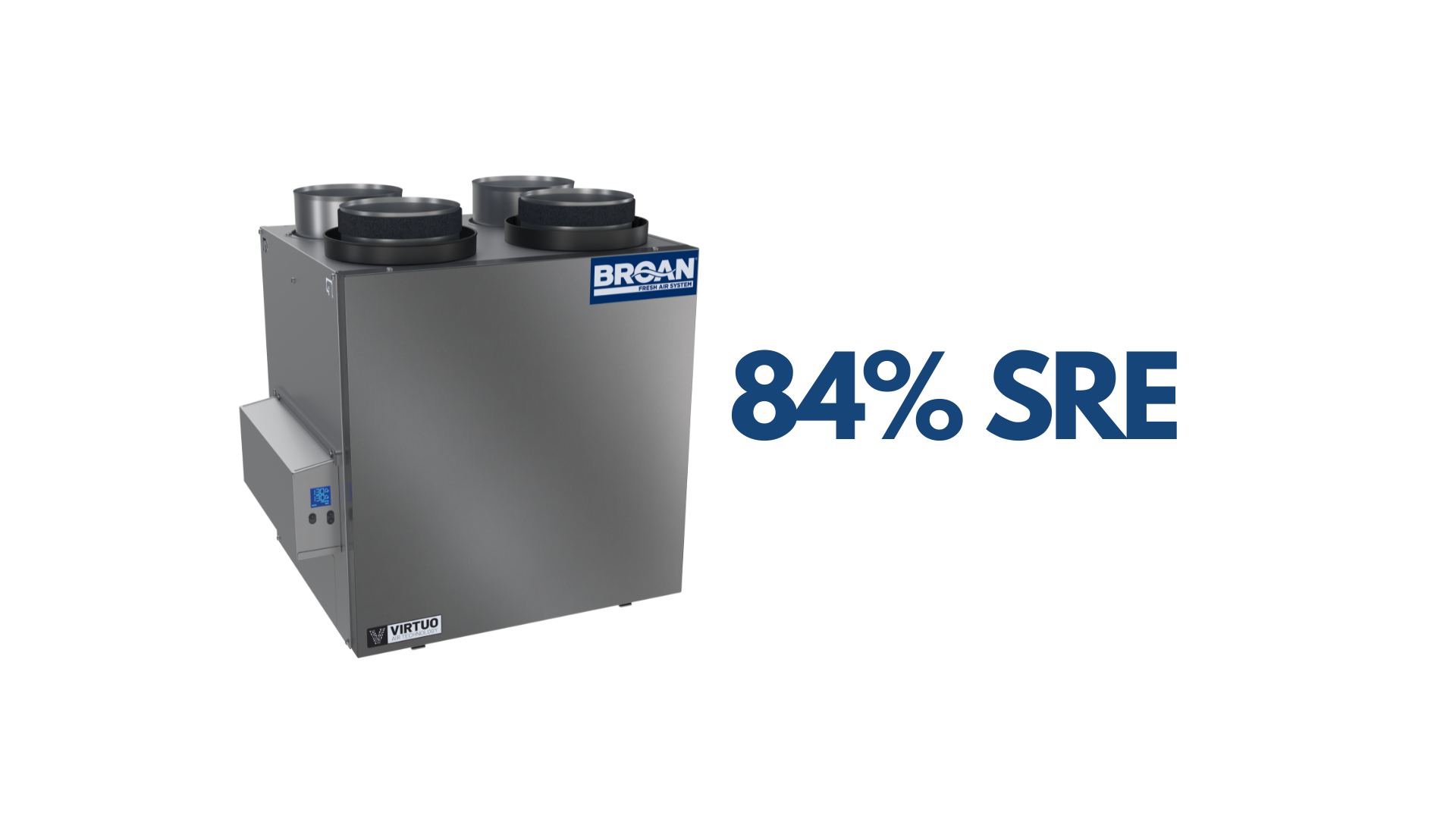
Broan offers a wide range of HRVs and ERVs, with SRE up to 84%. These products are the smart choice when it comes to energy efficiency and code requirements. Contact your Broan representative to learn more about how Broan can help you maximize your investment.
View our Broan AI Series units that reach more than 80% SRE:
.png "84-SRE-(1).png")
Discover the features and benefits of our Broan AI Series HRVs and ERVs
Building or specifying in Washington? Meet 2021 Washington State Energy Code requirements with Broan H/ERVs
Frequently Asked Questions
What does SRE mean on an HRV or ERV?
SRE stands for Sensible Recovery Efficiency. It measures the percentage of available heat that an HRV or ERV can recover from outgoing stale air and transfer to incoming fresh air.
Is a higher SRE always better?
A higher SRE generally means better heat recovery and improved energy efficiency. However, the right model also depends on airflow needs, climate, code requirements, budget, and installation conditions.
What is considered a good SRE rating?
Many systems fall around 60% to 80%+ SRE. Models above 80% are typically considered high-efficiency options and may be helpful for projects focused on energy credits or stronger performance targets.
Can a lower-SRE HRV or ERV still save energy?
Yes. Even a model around 65% SRE can recover about two-thirds of the available sensible heat from exhausted air, making it more energy efficient than relying only on an exhaust fan or open window for ventilation.
Why does SRE matter for HERS scores and energy credits?
SRE matters because higher-efficiency ventilation can reduce the energy impact of bringing outdoor air into the home. In many programs, stronger ventilation efficiency can support better energy modeling results and potential credits.
Do both HRVs and ERVs have SRE ratings?
Yes. HRVs and ERVs can both be evaluated by SRE because both systems recover sensible heat. ERVs also transfer some moisture, but SRE specifically focuses on sensible heat recovery.