
How Pet Dander Affects Indoor Air Quality and What You Can Do About It
Pet dander can reduce indoor air quality because microscopic skin flakes, saliva proteins, fur particles and other pet-related allergens can become airborne, settle into fabrics and recirculate through the home. Regular grooming, HEPA vacuuming, clean bedding, better filtration and proper ventilation can help reduce pet-related airborne particles and create a cleaner indoor environment.
What Is Pet Dander?
Pet dander is made up of tiny flakes of skin shed by animals with fur or feathers. These particles are extremely small, lightweight and easy to spread through the air.
Many people assume pet hair is the main problem, but pet allergens are often found in dander, saliva and urine. These allergens can stick to fur, fabrics, carpet, bedding and upholstered furniture. Once disturbed, they can become airborne again and move throughout the home.
According to the American Pet Products Association, 95 million U.S. households own a pet. That makes pet-related allergens a common indoor air quality concern for many families.
According to the American Lung Association, pet dander can remain suspended in the air longer than heavier particles and can collect on surfaces throughout the home. For people with allergies or asthma, that can make symptoms harder to control.
How Pet Dander Affects Indoor Air Quality
Pet dander affects indoor air quality by adding microscopic particles and allergens to the air you breathe. Because homes are enclosed spaces, those particles can build up indoors, especially when ventilation is limited or cleaning is inconsistent.
Pet dander is especially difficult to manage because it is very small and lightweight. The Mayo Clinic notes that dander can remain airborne for long periods with even slight air circulation, collect in upholstered furniture and stick to clothing.
Pet-related particles do not stay in one room. They can attach to clothing, move through HVAC systems, settle into soft surfaces and re-enter the air during vacuuming, dusting, playing with pets or simply walking across carpet.
| Pet-related source | How it affects indoor air | What helps reduce it |
|---|---|---|
| Dander | Microscopic skin flakes can become airborne and settle throughout the home. | Regular grooming, cleaning and filtration. |
| Saliva on fur | Allergen-containing proteins can dry on fur and transfer to surfaces. | Bathing when appropriate and wiping paws or coats after outdoor time. |
| Pet bedding | Beds, blankets and crates can become reservoirs for dander and hair. | Washable bedding cleaned frequently. |
| Carpet and upholstery | Soft surfaces trap dander and release it when disturbed. | HEPA vacuuming and microfiber dusting. |
| Stale indoor air | Limited air exchange allows airborne particles and indoor air pollutants to accumulate. | Proper ventilation and fresh air exchange. |
For a broader look at household pollutants, read Common Indoor Air Contaminants and How to Reduce Them.
Pet Dander, Allergies and Asthma Symptoms
Pet dander can trigger allergic reactions and asthma symptoms in sensitive people. Common symptoms include sneezing, watery eyes, nasal congestion, coughing, wheezing, rashes and general respiratory discomfort.
The American Academy of Allergy, Asthma & Immunology explains that proteins found in pet dander, skin flakes, saliva and urine can cause allergic reactions or aggravate asthma symptoms in some people.
The CDC identifies pets as a common asthma trigger and recommends reducing exposure to triggers that make symptoms worse.
Pet dander does not affect everyone the same way. Some people notice symptoms immediately after being near a cat, dog or other pet. Others may feel symptoms more strongly in rooms where dander has collected over time, such as bedrooms, living rooms or carpeted areas.
If someone in your home has asthma, allergies or ongoing respiratory symptoms, speak with a healthcare professional about the best approach for managing exposure.
5 Ways to Reduce Pet Dander at Home
1. Groom Your Pet Regularly
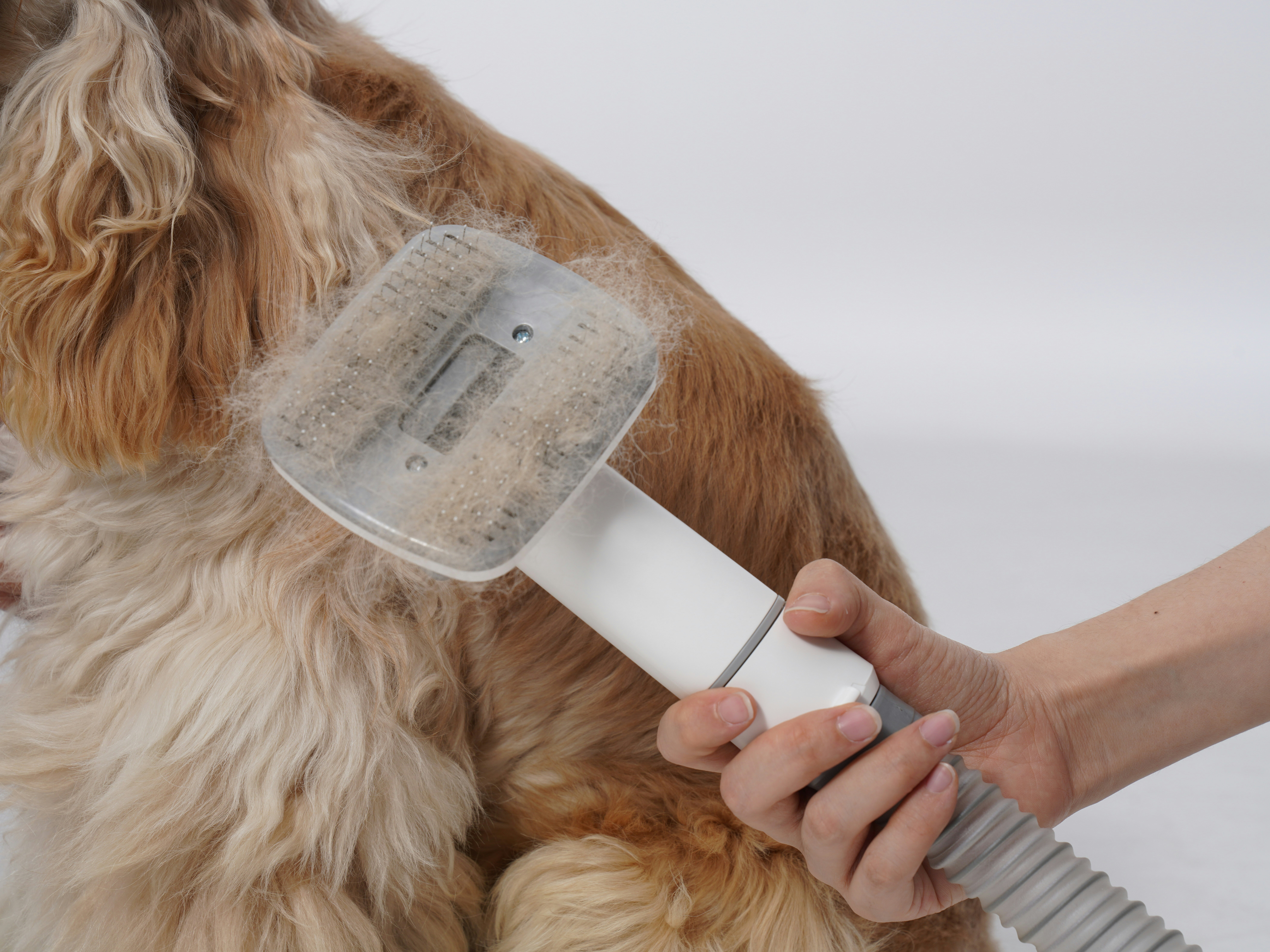
Regular brushing helps remove loose hair and dander before it spreads through your home. When possible, brush pets outdoors or in an easy-to-clean area. Bathing can also help, but the right schedule depends on your pet’s breed, skin condition and veterinarian recommendations. Over-bathing may irritate some pets’ skin, which can make shedding and dander worse.
2. Clean Surfaces, Furniture, Floors and Carpets Frequently
Vacuum carpets, rugs and upholstered furniture with a vacuum designed to capture fine particles. A HEPA vacuum is especially helpful for homes with pets because it can trap smaller particles instead of sending them back into the room.
Use microfiber cloths on hard surfaces, shelves, tables and countertops. Microfiber is effective because it captures dust and dander rather than simply pushing particles back into the air.
3. Wash Pet Bedding and Soft Surfaces
Pet beds, blankets and favorite resting spots can collect dander quickly. Choose washable bedding and clean it often. If pets sleep on furniture, use washable covers where possible and clean them regularly.
4. Check and Replace HVAC Filters More Often
Homes with pets often load HVAC filters faster because of fur, dust and dander. Check filters monthly and replace them according to the manufacturer’s recommendations, or sooner if they look dirty.
A higher-efficiency filter may help capture more airborne particles, but it must be compatible with your HVAC system. Using a filter that is too restrictive can affect system performance, so follow your system manufacturer’s guidance or ask an HVAC professional.
Portable air cleaners equipped with HEPA filters can also help capture airborne pet dander in specific rooms. They work best when combined with source control, routine cleaning, HVAC filtration and proper ventilation.
5. Keep Pets Out of Sleeping Areas When Possible
Bedrooms matter because people spend many hours there every night. Keeping pets out of sleeping areas can help create a lower-allergen zone, especially for people with pet allergies or asthma.
If pets do enter bedrooms, clean floors and bedding frequently, reduce fabric clutter and keep airflow moving. For more tips, read Creating Healthier Nurseries and Bedrooms with Fresh Air and Ventilation.
How Ventilation Helps with Pet Dander and Indoor Air Quality
Cleaning and filtration help capture particles that have already settled or are moving through your HVAC system. Ventilation plays a different role: it helps replace stale indoor air with fresh outdoor air, diluting indoor pollutants that build up over time.
The EPA notes that improving ventilation can help reduce indoor air pollutant levels when outdoor air quality is acceptable.
For homes with persistent pet odors, dander buildup or stale air, balanced fresh air systems such as HRVs and ERVs can help support healthier indoor air quality by continuously exchanging stale indoor air with fresh outdoor air. Learn more about the role of fresh air in Fresh Air Ventilation: Why Your HVAC System Isn't Enough.
Pet dander will never disappear completely in a home with pets, but it can be managed. The most effective approach combines source control, routine cleaning, filtration and proper ventilation.
Frequently Asked Questions
Does pet hair cause allergies?
Pet hair itself is not usually the main allergen. The American Academy of Allergy, Asthma & Immunology explains that pet allergies are caused by proteins found in pet dander, saliva and urine. Hair can still carry those allergens, along with dust, pollen and other particles.
Can air filters remove pet dander?
Air filters can help capture airborne pet dander, especially higher-efficiency filters that are properly matched to the HVAC system. Portable HEPA air cleaners may also help reduce airborne particles in specific rooms. Filters work best when combined with cleaning, grooming and ventilation.
Does opening windows help with pet dander?
Opening windows can increase fresh air exchange when outdoor air quality is good, but it may also bring in pollen, humidity or outdoor pollutants. A dedicated ventilation system provides a more controlled way to exchange indoor and outdoor air.
How often should I vacuum if I have pets?
Homes with pets usually need vacuuming more often than homes without pets. High-traffic areas, pet sleeping spots, rugs and upholstered furniture may need cleaning several times per week, especially if someone in the home has allergies or asthma.
Are any pets truly hypoallergenic?
No pet is completely allergen-free. The American College of Allergy, Asthma & Immunology notes that all dogs produce allergens and that studies have not shown dogs can be truly hypoallergenic.
Can ventilation reduce pet allergens?
Ventilation can help dilute airborne contaminants, including pet-related particles, by replacing stale indoor air with fresh outdoor air. It should be used alongside cleaning and filtration rather than as the only solution.